March 2026
On February 8th of 2024 I recieved a heart transplant. The goal of this site to describe and explain various aspects of having this operation from the patient’s perspective. Before I had this life saving procedure I was almost totally unaware of what it really entailed. I did not have a choice for whether or not to have a heart transplant if I wanted to have any kind of quality of life. Or any life at all for that matter. With that in mind I thought it would be helpful to certain people to know some of what goes on when someone has a heart transplant. It’s quite a bit to deal with for the patient and the caregiver(s).
Here are some of the groups of people that make a potential audience:
- Heart patients who are on the transplant list waiting for a heart transplant. Like me, they have no choice but want to learn about one person’s experience.
- Patients who are deciding if a transplant is right for them. They have a choice to live with their native heart, or get on the transplant list.
- Patients who have had a transplant may want to read about another patient’s experience.
- People who have been diagnosed with cardiac sarcoidosis, the disease that claimed my native heart.
- Caregivers, family members and loved ones of those listed above.
- Anyone who is curious. Everyone is welcome and comments and suggestions are encouraged.
I have no medical background, education or training. I am not even a professional writer as you will see if you continue reading. Nothing in what I describe in my writing should be used by anyone for making any decisions on treatment. I have learned much in my 6 or 7 years of advanced heart failure and heart transplantation. This knowledge is a part of taking care of myself. I gained it, along with my supporting wife, only as a patient with my particular set of challenges.
One important aspect of this operation I have learned is that each one is unique. There are a mind boggling number of variables that go into each heart transplant. Variables brought by the patient and the totality of their case as well as the history and circumstances presented by the donor heart. Bear in mind some of what happened to me might not happen to someone else. Then again, some things are universal and will happen to all transplant patients, but on different time frames.
The first successful human heart transplant ever performed was December 3, 1967 in Cape Town, South Africa. That patient, Louis Washkansky, survived 18 days before succumbing to pneumonia. Since that first transplant there have been more than 120,000 heart transplants globally. Today there are about 5,000 to 6,000 per year worldwide. The median survival time today post-heart transplant is 12 years. Of course, some live mush longer. Some shorter. Much depends on age, demographics and many other patient characteristics. That increase, from 18 days to 12 years, resulted from the collective learning and collaboration of the medical community over the past 59 years.
In a very real sense, heart transplant survival time expansion has been earned on the backs on the 120,000 transplants that have taken place so far. One of the aspects of this for me is the unusual lifetime changes that I need to follow post-transplant. I remind myself that to honor the precious donated heart that I received I need to follow the playbook that currently exists as closely as I can to squeeze out every moment of life. It really is small price to pay compared the gift I have been granted.
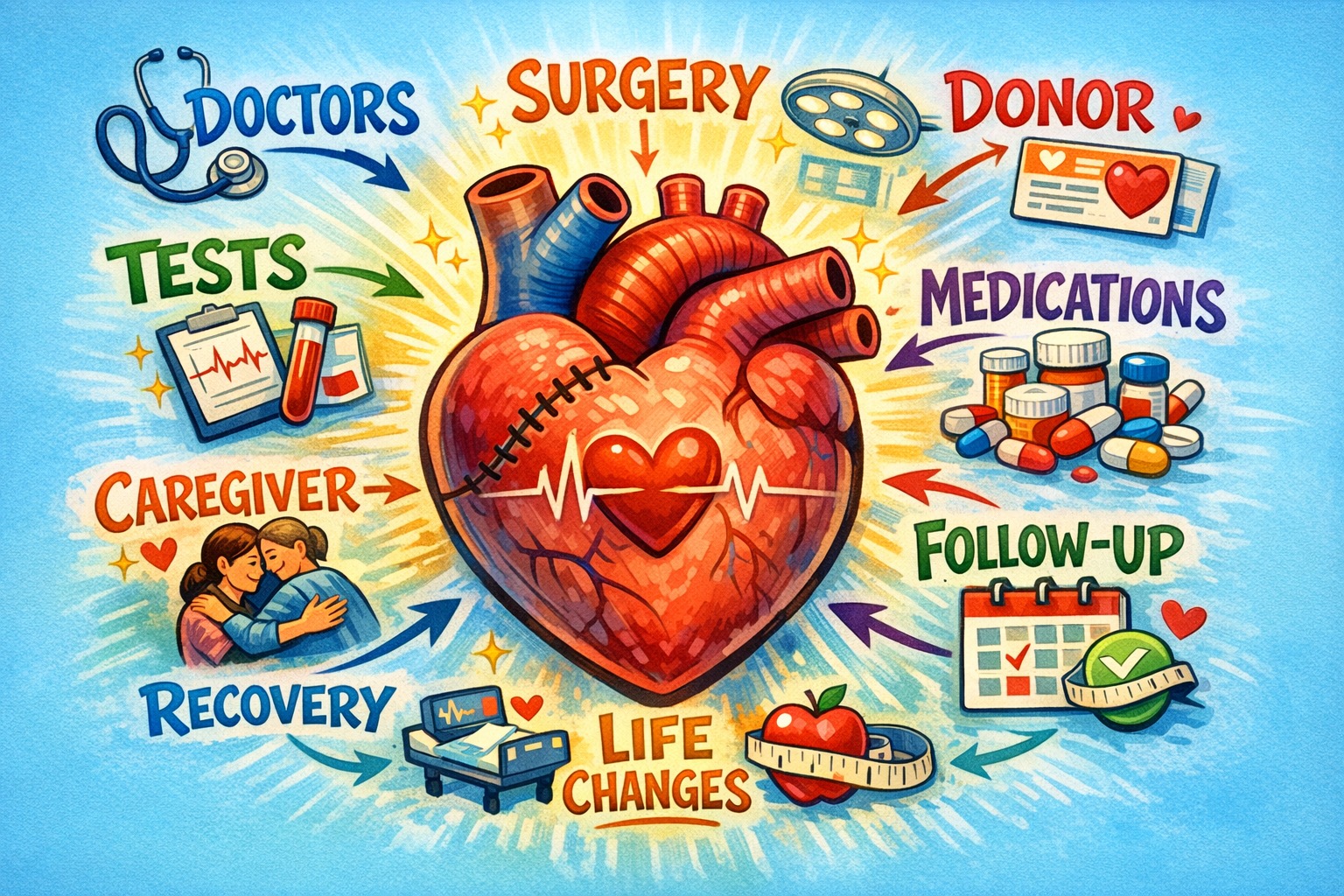
Here is what I intend to write about based on what I think people in the proposed audience above would be interested in, or might find helpful:
- Getting on the Transplant List
- The Donor
- Waking Up After Transplant
- Recovery in the Medical Center
- Procedures and Tests
- Managing the Healthcare System
- Managing Medications and Side Effects
- Recovery at Home
- The Caregiver (With an Interview With My Wife Lauren)
- Guidelines Regarding Food
- Cardiac Rehab
- What Caused My Transplant (Sarcoidosis)
- Having an Implanted Cardiac Device
- Support Groups
- The Unexpected
- …And More
I want to acknowledge all those people God has put in my life that have brought me to this point. My life was headed to an abrupt end. A wide array of people and resources have changed that. I am deeply grateful.
From the beginning I have been amazed at the kindness and skill from my teams at Tufts Medical Center and Beth Israel Deaconess Medical Center in Boston Massachusetts. My wife Lauren, as primary caregiver, is equally important. She continues to provide me a heavy dose of love, patience, and steadiness through all of this. She is my rock. I have been surrounded with love and understanding by my daughters, family and friends as well. Each of them is a living testament to God’s grace and love.
Phil Liaboe
 My Heart Transplant Journey
Leave a comment