The allocation of hearts for transplant is a bit mysterious for the patient. There are many variables and some subjective analysis by surgeons that goes into the process. My goal here is to summarize what I have learned.
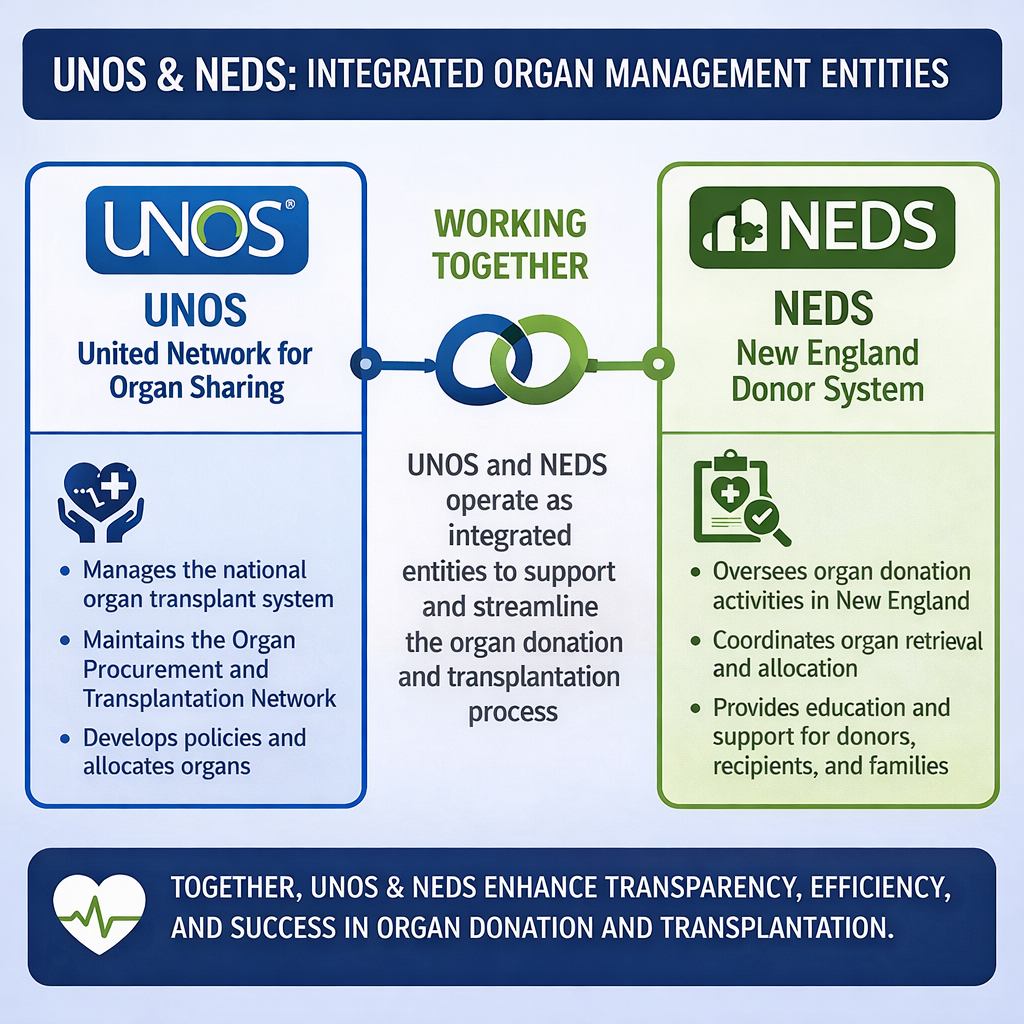
UNOS (United Network of Organ Sharing)
In the United States, an organization called UNOS, operates and manages the waiting list for organ transplant. The same conceptual model described below exists in countries outside the US, though the details differ.
UNOS uses a matching algorithm to allocate organs based on the following:
- Medical urgency – (Status Level)
- Blood type compatibility
- Body size match
- Geographic proximity
- Time on the waiting list
I was listed on the heart transplant list for more than 3 years. I waited so long partly because I was listed as the lowest urgency status. Level 6. Another potential contributing factor was my height. I am 6 feet 3 inches tall. Statistics show that only 1-2% of men in the United States are my height. Turns out in heart transplantation size matters. Those two factors together likely led to an extended stay on the transplant list for me.
MEDICAL URGENCY STATUS LEVELS
Each level description has a high degree of complexity. For this purpose, here is a short summary of each of the Status Levels:
- Level 1 – Highest Priority – Patients are often in the ICU. Life threatening complications. External life support. Hours-to-days level risk without transplant.
- Level 2 – Very High Priority – Temporary cardiac support. Critically ill, but more stable than level 1. Will not leave the hospital without a transplant.
- Level 3 – Stable – likely dependent on cardiac assist devices, serious heart failure but not at risk for immediate collapse
- Level 4 – Advanced Heart Failure – lower urgency, certain congenital heart disease cases. Often can live outside the ICU or at home.
- Level 5 – Moderate Urgency – declining heart function, transplant needed but not imminently.
- Level 6 – Lowest Priority – early-stage advanced heart failure, stable and able to medically manage at home, outside the medical center.
- Level 7 – Inactive temporarily. A patient can choose to move to level 7 for a variety of reasons. An example is a medical situation that rules out transplant surgery until the problem resolves. The patient continues to accrue time (credit) even though they are Level 7. This level helps the system so that someone who is inactive does not get allocated a heart, increasing efficiency. Time is critical.
NEDS (New England Donor Services)
NEDS operates and controls the area that I live, Boston metro. NEDS and UNOS play separate but tightly integrated roles in managing transplant organs. NEDS main role is the collection and delivery of the donated organs, in my situation, hearts. Summarized as follows:
- Finds and manages donors.
- Interfaces with hospitals and families
- Physically coordinates organ recovery and logistics.
BOTTOM LINE:
UNOS decides who should get a donor heart.
NEDS makes sure the heart gets to where it needs to be.
The surgeon participates in the management above. They decide if a heart that is available for any given patient is offered to that patient. The surgeon may determine that a donor heart is not appropriate for a patient. This decision is made alongside others on the transplant team, based on medical reasons.
Finally, the patient, once offered the heart can refuse. If the donor had Hepatitis C, for example, the patient must be informed at the time of the offer. Hepatitis C is now curable. If a heart that was Hep C positive were to be transplanted, the patient would likely be infected. Then, the patient would be cured post-transplant. I recall signing a form early on establishing that I would be open to a heart that had Hep C.
MY TIME ON THE TRANSPLANT LIST
I spent a little time learning about this while I was on the list. This system in my view is a miracle in its own right. The tight time sensitive communications that take place at several levels by many highly trained professionals continues to amaze me. Skilled and dedicated people at every step are managing this complex world behind the scenes. I was never able to meet any of them. They saved my life.
Three years is a long time to wait, particularly when advanced heart failure is concerned. I was unsteady in almost every way. I will explain in detail in a later post the entirely of symptoms that I had. In summary I survived during that time with the following:
- Continuous PVCs (premature ventricular contractions) – This feels like a palpitation or flutter. Like the skipped beat you feel if you have a Cinnabon and a large coffee together. According to my implanted cardiac device, which recorded data continuously, I was experiencing 1.3 million PVCs per 3-month period. I felt every single one.
- Pounding Heart – The most prominent symptom I had was a very strong and unsettling pounding sensation in my chest. It never stopped. Trying to fall asleep with that sensation and what it meant was difficult and wore me down.
- Threat of Ventricular Tachycardia – (aka: VT, VTach) The disease that caused all of this is cardiac sarcoidosis. It resulted in scarring in my heart. This scarring interrupted the electrical impulses controlling my heart resulting in occasional VT. VT is a heart rate greater than 120 beats per minute. The danger zone for this is a “sustained VT” of 150 – 250 bpm. My implanted cardiac device was set to shock me (defibrillation) if I reached a sustained 220 bpm. I was shocked out of that dangerous arrhythmia 6 times. I was constantly worried about my heart rate sailing off into VT.
- A collection of other cascading stuff I lived with like:
- Unable to climb a flight of stairs without resting (or I would go into VT)
- Unable to drive (Once you get shocked you lose your license for 6 months)
- Shortness of breath just walking or talking.
- Falling asleep sitting in a chair several times a day (I had never ever done that before)
I could go on. Those are the most obvious challenges. My dear loving wife and I dealt with them for over a thousand days.
One of the requirements I needed to attend to during this time was getting a long list of vaccinations and immunizations. I won’t list them all but some examples are shots for the flu, COVID, shingles, Hepatitis B, Tdap (tetanus, diphtheria, pertussis), Pneumococcal etc. These shots are needed because of post-transplant immunosuppression. The assumption is that the transplant will happen. It’s not box that can left unchecked if the call comes that there is a heart being offered.
THOUGHTS ABOUT DEATH
I don’t suppose most folks like to think about death. So we don’t. Then a situation arises when we have to. I was reading a novel recently where the character was walking in a cemetery and encountered a gravestone that read “DO NOT ENTER”. That pretty much sums it up.
When this first hit me I was stunned with the prospect that my life was headed toward a cliff. I was extremely sad and emotional. Crying at times. I am typically not a crier. I was not afraid. Maybe a little angry. Mostly just sad. Sad about everything. My life as I knew was blown up. I hated that my problem was now my loving wife’s problem too. I was dragging the family through this nightmare with me.
Every night, I tried to sleep with the pounding in my chest. PVCs fired away as I lay in bed. I gave myself a 50/50 chance I would wake up the next day. Then I would see light start to peek through the vertical blinds in our bedroom. I felt so thankful for getting another day.
I am a man of strong faith. A lifelong Christian. In the Sermon on the Mount, found in Matthew Chapter 5 of the New Testament, Jesus said, “Blessed are those who mourn, for they shall be comforted.” It just one of the eight beatitudes. I was mourning the life I had built for 60 years. It took awhile, but over time I was comforted.
A few years ago, my wife and I spent some of my accumulated travel points. We went on a mini vacation to tour Washington DC. During that trip one of the places we visited was the Vietnam Memorial. More than 58,000 names are etched on that black granite. The vast majority of those names are people whose life ended very young. It was a moving experience seeing that. Just one of many examples of people whose life was much shorter than mine. Wars, diseases, car accidents, you name it. They all claim lives of young people every day. The life expectancy in the United States did not reach 60 years old until about the 1930s. On average, most people from the beginning of time until 1930 did not reach the age I was at.
It took a long time, but my sadness slowly turned to gratitude. Gratitude for the life I have had so far which has been immensely blessed and filled with love and faith. By some measure, it had even been long. I did not want my life to end. I did gain a measure of peace with the likelihood that it would end very soon. I was comforted.
THE CALL
During this time I also recall being hyper vigilant about answering every single cell phone call. In this day and age we have been conditioned to ignore phone calls if we don’t recognize the number. That is not an option while on the transplant list. Any incoming call could be THE CALL.
That was my 3 years on the heart transplant list. Then on February 8th of 2024 at 3 am I got the call. A cardiologist and a nurse practitioner from Beth Israel Deaconess were on the line. They told me they had a match. The wait was over. They were offering me a heart! The doctor said, “Pack a bag and come on in. Today you are going to get a heart transplant!”
 My Heart Transplant Journey
Leave a comment