By Phil Liaboe
Interview With a Caregiver
It’s not enough to state that the person who assumes the role of caregiver to a heart transplant patient is important. It is essential. During the process for admission to the transplant wait list at both Tufts and Beth Israel it was clear that they wanted to know what level of support I would have. Without exception, every transplant patient I have spoken with is very quick to recognize their caregiver and the critical nature of the role they play.
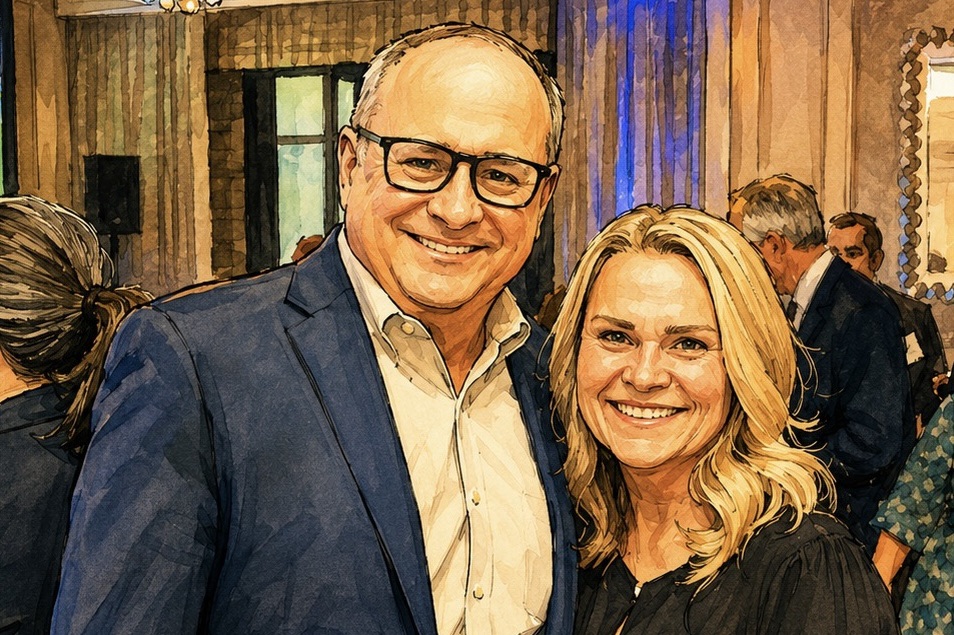
I will freely admit that I only know my own case in detail. I imagine from patient to patient the dynamics are different as to what roles and tasks the caregiver plays. In my case my caregiver is my loving wife of 36 years. I am sure there are strategies for how to cope for patients who do not have a live in spouse, partner or family member.
Did I need more help or less help than the average patient? I have no idea. My contact with other patients has mostly been through the support group sponsored by the caring and attentive Social Worker at Beth Israel Deaconess. As patients we meet for 1 hour monthly via teleconference and usually explore a specific topic. I find these sessions to be informative and helpful to build new relationships with people in a similar situation. As far as my case goes, there is a lot of consistency within the support groups I have attended with respect to the caregiver role.
With that, let’s start the interview:
===========================
Q: Hi Lauren, can you give us a summary of your background prior to facing this challenge?
A: Of course. As mentioned, Phil and I have been married now for more than 36 years. I have a nursing background, so I have some familiarity with health care, hospitals and medications and that has been helpful. Also, this was the second time I have assumed this role. My first husband battled cancer for several years and tragically passed away at a young age.
Q: That must have been extremely difficult. What are some key elements that you think would be helpful to someone who is likely to be filling this role?
A: One of the first things I would recommend would be to go into it with eyes wide open and with no set expectations. Every case is different and many variables will dictate the direction and timetables for each patient.
Also, it’s very important to take care of yourself. Yes, caring for the patient can be overwhelming at times; however, the caregiver needs to take care of themselves as a priority as well. Like the airline announcement says “place the oxygen mask on yourself first, then assist others.”
We live about 45 min from Beth Israel. I was in a nearby hotel for the 4 nights during the operation and while he was on ECMO. After he was taken off ECMO I felt comfortable going back and forth to home for the duration of his time prior to discharge. Together we agreed I did not need to be there during the entire visiting hours period. Later in the afternoon the traffic of visiting specialists to the patient room trails off.
Q: What, if anything, surprised you about the role of caregiver to a heart transplant patient?
A: I was surprised that once we got home the role was very much like taking care of a toddler. Physically and cognitively the caregiver is doing pretty much everything for 2 or 3 weeks. Daily activities like showering, getting dressed, cooking and thought processes are all beyond the patient’s ability for that time period. It’s hard at first. Taking blood glucose readings, getting blood pressure and record keeping doesn’t sound like much, but for the patient who is still barely able to walk unassisted it’s a lot. The caregiver needs to do it all.
He was unsteady for a long time. We were home after just 13 days so all of the incisions were very fresh. Stepping in and out of the shower. Drying off. Putting on clothes. We were both terrified of a fall given that the sternum was still in its early healing stages.
Q: How did you go about managing all the information provided by the medical center?
A: The transplant team provided a 3-ring binder packed with information. We were given this once we were added to the organ wait list. I read that. Made notes. I referenced it quite often.
I attended every meeting that Phil had with the transplant team, which were frequent in the early stages of recovery. That would include all in person meetings, clinics and tele-health discussions. Phil and I took notes at each of these sessions and compared notes afterward. I would catch a lot of information that he remembered differently or just did not remember at all.
In addition to attending these meetings, the follow-up procedures and tests are also frequent in the early going. For instance, he has had more than 12 heart biopsies, each via a right heart catheterization. The patient is not allowed to drive home afterwards. Each of those and most other procedures consume the better part of a day getting into the city, the time for the procedure, then getting back home. My point is the caregiver just needs to understand there an enormous time comittment.
One of the keys to managing the constant flow of information is for the caregiver to access the patient portal. The Beth Israel patient portal has a feature enabling family members to be added. I was able to go in and read doctors notes, get blood test results, correspond and ask questions of the team through use of the patient portal.
Anytime a member of the medical team called Phil, he always put the call on speaker if I was around. It’s just good to have another person hearing instructions and getting information.
Q: How long after the transplant until things started to normalize.
A: The most intense period is the first 6 months. That was the highest period of risk for him regarding infection or rejection. Remember the patient can’t drive. The patient has very strict guidelines on food. We were not allowed to eat food unless we were certain of specific preparation guidelines for that 6 month period. No restaurants. No take-out. The first week at home was very overwhelming and I had to take a deep breath and really figure out how to make eating work. Keeping it simple was key. After 6 months it becomes easier to manage.
Those first 6 months were not unlike the most critical time of COVID. Remember, the caregiver can’t get sick either because that raises the risk to the patient. We were both wearing masks and hitting the pump on containers of anti-bacterial hand cleaner just as we did during COVID.
Q: Do you have any other closing remarks or suggestions?:
A: I tried to be the line of first defense during that early period. I was very hesitant to let anyone else in the house. If we did have visitors, they had to wear masks in the house and keep their distance from Phil. It was difficult because we have kids and grandkids we want to see and be with. We would sometimes still see them in the early going, but it’s different when everyone is worried or on high alert. They did not want to be the cause of him getting sick.
The period that led up to transplant was equally challenging I would say. Phil was in advanced heart failure for more than 3 years. During most of that time he was unable to drive because he had been shocked by his defibrillator several times. He had been through numerous hospital admissions, surgeries, tests and procedures. It was a bumpy road for all involved. One of the hardest things to watch was Phil working through life changing situations like giving up things like work and playing basketball weekly with his friends. To see the sadness that came over him was heart breaking. I had to let him feel all the feelings and I wanted to be there when he was ready to talk. His health changed how we thought retirement would look. Is is better or worse? Neither one. It is just different and its perfect.
One aspect for us was that neither of us was working. That was fortunate. I had not worked outside the home for most of our marriage prior to this event. For Phil, this hit him at a time where he was near retirement, so he went from being on long-term disability right into retirement. We could take our time and basically dedicate the time to recovery. I would say for younger people who are seeking to get back to the workforce there would be a different set of challenges.
Lastly, there is support for caregivers similar to support groups for the patient. The medical center runs a caregiver support group. In addition, social media sites like Facebook and others have groups dedicated to heart transplant patients and their caregivers.
===============================================
This concludes the interview. I hope this was helpful. Much of what Lauren communicated here would apply to many situations where a caregiver needs to step in and assume this essential part of the patient’s comeback. I am very blessed and fortunate to have a life partner who is loving, strong, smart and courageous enough to make the daily long term sacrifices this whole experience had demanded of her. I thank God every day that she is in my life.
© 2026 Phil Liaboe. All rights reserved.

 My Heart Transplant Journey
Leave a comment